How Single-Material (MDO-PE/CPP) Solves Recycling Challenges of Multi-Layer Flexible Packaging
1. Core Pain Points of Traditional Multi-Layer Flexible Packaging Recycling
The global flexible packaging industry is undergoing an unprecedented sustainability transformation. Driven by strict environmental regulations across the EU, North America, and Southeast Asia, as well as growing consumer demand for eco-friendly products, brand owners and packaging manufacturers are abandoning traditional multi-layer composite packaging structures. For decades, multi-material flexible packaging combining PET, BOPP, AL, and PE has dominated the market, thanks to its excellent barrier performance, mechanical strength, and printing adaptability. However, its inherent structural defect—heterogeneous polymer lamination—has become the biggest bottleneck restricting packaging recycling and circular economy development.
Traditional multi-layer flexible packaging integrates multiple incompatible polymer materials through adhesive lamination. After consumer use, the mixed-material films cannot be effectively separated in conventional recycling systems. Impurities from different polymers severely reduce the purity and usability of recycled resins, resulting in most composite packaging waste ending up in landfills or incineration. This not only causes massive plastic resource waste but also triggers carbon emission and environmental pollution problems. Against this backdrop, single-material packaging represented by MDO-PE and CPP has emerged as a game-changing solution, completely subverting the recycling dilemma of traditional multi-layer composite packaging while retaining full functional performance.
To fully understand the value of MDO-PE/CPP single-material packaging, it is essential to clarify the fundamental recycling flaws of conventional multi-layer composite structures. Traditional composite flexible packaging usually adopts dissimilar material combinations, such as PET/PE, BOPP/PE, PET/AL/PE, and BOPA/PE. Each layer undertakes different functions: the outer layer provides stiffness, printing adaptability and abrasion resistance; the middle barrier layer blocks oxygen, moisture and light; the inner heat-sealing layer ensures packaging tightness and food safety.
Although this multi-layer heterogeneous structure achieves perfect packaging performance, it brings insurmountable recycling challenges. First, material separation is technically difficult. Different polymers have distinct melting points, chemical properties and density characteristics. Industrial recycling equipment cannot efficiently delaminate and purify composite films, leading to mixed recycled materials with unstable quality. Second, recycled resin value is extremely low. Mixed plastic materials cannot be reused in high-end packaging production and can only be applied to low-value products such as plastic lumber, resulting in serious resource devaluation.
Third, global regulatory compliance pressure is rising sharply. The EU PPWR (Packaging and Packaging Waste Regulation), US plastic recycling standards, and various national carbon neutrality policies have explicitly restricted non-recyclable multi-material packaging. Many international brands have launched sustainable packaging roadmaps, requiring all packaging products to achieve 100% recyclability or biodegradability within the next 3-5 years. Traditional multi-layer composite packaging can no longer meet global market access standards, forcing the industry to upgrade iteratively.
In addition, traditional multi-layer packaging relies on chemical adhesives for lamination. Residual adhesive components in recycling processes will pollute recycled resins, further reducing recycling efficiency and product quality. These inherent flaws make multi-material composite packaging unsustainable in the era of circular economy, creating a huge market gap for high-performance and fully recyclable single-material packaging.
2. Technical Advantages of MDO-PE & CPP Single-Material Packaging
MDO-PE (Machine Direction Oriented Polyethylene) and CPP (Cast Polypropylene) are the two most mature and widely applied single-material packaging solutions in the current flexible packaging industry. Different from heterogeneous composite structures, both MDO-PE and CPP series packaging adopt homogeneous polymer single-family design. All functional layers are made of pure PE or pure PP materials without introducing dissimilar polymers, fundamentally solving the separation and purification problems of traditional composite packaging recycling.
2.1 MDO-PE Single-Material Structure Features
MDO-PE film is produced through professional machine-direction orientation stretching technology. The PE raw material is longitudinally stretched under precise temperature and tension control, which greatly improves the film’s stiffness, tensile strength, dimensional stability and surface smoothness. Compared with ordinary blown PE film, MDO-PE has outstanding printing performance and abrasion resistance, fully replacing traditional PET and BOPP outer printing layers.
The typical MDO-PE single-material packaging structure adopts an all-PE system: MDO-PE outer printing layer + functional barrier PE middle layer + heat-sealing PE inner layer. All layers belong to the polyethylene polymer system with completely compatible material properties. Even with ultra-thin EVOH barrier coatings compliant with CEFLEX standards, the trace additive content will not affect overall recyclability. This structure retains the multi-layer functional design of traditional packaging while realizing single-material recyclability.
In practical application, MDO-PE single-material packaging shows excellent comprehensive performance. Its stiffness and optical properties are equivalent to traditional BOPP/PE composite films, and its drop resistance and impact resistance are even better than PET/PE structures. It can fully meet the packaging requirements of dry food, snacks, frozen food, daily chemicals and other products, achieving zero compromise on protective performance while realizing full recyclability.
2.2 CPP Single-Material Structure Features
CPP cast polypropylene film features high temperature resistance, excellent heat-sealing performance and stable barrier properties. Different from MDO-PE’s focus on normal and low-temperature scenarios, CPP single-material packaging is more suitable for high-temperature sterilization scenarios such as retort food packaging. The all-PP single-material structure composed of BOPP and CPP has a high temperature resistance of up to 121°C, perfectly adapting to high-temperature cooking and sterilization processes.
The CPP single-material composite structure completely abandons dissimilar material lamination. All functional layers are polypropylene materials with consistent physical and chemical properties. During recycling, the whole film can be directly melted, purified and granulated without complex delamination treatment. The recycled PP resin has high purity and stable performance, which can be reused in high-end flexible packaging production, forming a complete closed-loop circular economy.
3. How MDO-PE/CPP Single-Material Structures Resolve Core Recycling Dilemmas
3.1 Eliminate Material Separation Barriers
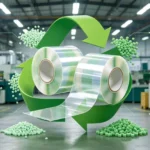
The core recycling pain point of traditional multi-layer packaging is the incompatibility of heterogeneous materials. MDO-PE and CPP single-material structures adopt a single polymer system, realizing one-step recyclability. After post-consumer collection, the waste packaging films can directly enter conventional plastic recycling production lines. There is no need for manual or mechanical delamination, which greatly simplifies the recycling process and improves recycling efficiency.
All components of MDO-PE full-PE packaging belong to the polyethylene family, and all layers of CPP full-PP packaging are polypropylene. The materials have consistent melting points, density and chemical compatibility. The recycled materials after melting and granulation have uniform texture and no impurity mixing, completely solving the problem of unstable quality of traditional recycled composite materials.
3.2 Improve Recycled Resin Purity and Reuse Value
Due to mixed impurities of multiple polymers and adhesive residues, the recycled materials of traditional multi-layer packaging can only be used for low-value recycled products, with extremely low economic benefits. In contrast, MDO-PE/CPP single-material packaging produces high-purity recycled resin after recycling and processing. The recycled PE and PP resins can be reprocessed into new flexible packaging films, realizing high-value closed-loop recycling instead of low-value degradation utilization.
This high-value recycling mode greatly improves the economic feasibility of packaging waste recycling, stimulates the enthusiasm of recycling enterprises for collection and processing, and fundamentally solves the problem of low recycling rate of flexible packaging waste. For brand enterprises, it can also reduce carbon footprint and obtain sustainable environmental certification qualifications.
3.3 Comply with Global Sustainable Packaging Standards
At present, global environmental supervision on packaging waste is becoming increasingly stringent. The EU PPWR regulations have clearly stipulated mandatory recycling rate targets for packaging waste and banned non-recyclable composite packaging in many fields. MDO-PE and CPP single-material packaging fully meet CEFLEX recyclability guidelines, EU plastic recycling standards and international brand sustainable packaging specifications, helping products smoothly pass global customs and market access audits.
In addition, single-material packaging can effectively reduce carbon emissions in the whole life cycle. The simplified structural design reduces the use of chemical adhesives and auxiliary materials, cutting production carbon emissions. Meanwhile, the efficient recycling system reduces landfill and incineration pollution, realizing dual optimization of environmental benefits and social benefits.
4. Application Scenarios and Market Value of MDO-PE/CPP Single-Material Packaging
With the dual advantages of high performance and high recyclability, MDO-PE and CPP single-material packaging have been widely applied in multiple industries. MDO-PE single-material structures are mainly used for normal-temperature and low-temperature packaging scenarios, including snack food, nut packaging, frozen food, daily chemical products, pet food, etc. It can replace traditional PET/PE and BOPP/PE composite packaging, maintaining excellent barrier, drop resistance and printing effects.
CPP single-material packaging focuses on high-end retort packaging fields, such as high-temperature sterilized meat products, ready-to-eat meals, medicinal packaging, etc. Its high temperature resistance and stable barrier performance meet the strict sterilization and fresh-keeping requirements of food and pharmaceutical industries, while achieving full recyclability.
For export-oriented packaging enterprises and brand customers, adopting MDO-PE/CPP single-material packaging can effectively avoid international environmental trade barriers, enhance product international competitiveness, and shape a green and sustainable brand image. In the context of global carbon neutrality and plastic reduction policies, single-material recyclable packaging has become an inevitable trend in the flexible packaging industry and the core competitive advantage of future export packaging products.
5. Conclusion: Single-Material Packaging Leads the New Trend of Flexible Packaging Circular Economy
Traditional multi-layer heterogeneous composite packaging is constrained by inherent structural defects and can no longer adapt to the global circular economy and sustainable development requirements. MDO-PE and CPP single-material packaging, with homogeneous polymer design, perfectly solves the recycling difficulties such as difficult delamination, low recycled material purity and low reuse value of traditional composite packaging.
While breaking industry recycling bottlenecks, MDO-PE/CPP single-material packaging retains excellent packaging protection performance, fully meeting the diversified packaging needs of global customers in food, daily chemicals, medicine and other industries. It not only helps enterprises comply with international environmental regulations and expand global export markets, but also realizes resource recycling and low-carbon environmental protection.
In the future, with the continuous upgrading of environmental protection policies and the continuous improvement of recycling technology, single-material recyclable packaging will completely replace traditional multi-layer composite packaging and become the mainstream standard of the global flexible packaging industry. Choosing MDO-PE and CPP single-material packaging is not only a choice of product upgrading, but also a strategic layout to grasp the future sustainable market.
Message us for more information