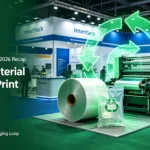
Tape Grade Recycled BOPP Film: High Performance Meets Sustainability
The global packaging industry is undergoing a definitive paradigm shift. For decades, packaging buyers and manufacturers have faced an unavoidable trade-off: choosing between reliable industrial performance or eco-friendly materials. Today, this compromise is no longer necessary. Modern circular manufacturing technologies have bridged the gap, enabling high-grade packaging materials that deliver both consistent industrial performance and genuine sustainable
For packaging converters, logistics enterprises, e-commerce brands, and industrial manufacturers aiming to reduce virgin plastic dependency, Tape Grade Recycled BOPP Film has emerged as a game-changing solution. A persistent industry myth claims that recycled plastic materials equal downgraded quality and unstable performance. This article comprehensively breaks down this misconception, explaining why Tape Grade Recycled BOPP Film has become a mainstream sustainable packaging choice, how it retains premium mechanical properties, and how it helps global businesses comply with evolving environmental regulations while securing long-term market
1. What Is Tape Grade Recycled</h2
BOPP (Biaxially Oriented Polypropylene) film is the most dominant substrate for carton sealing and industrial packaging tapes worldwide. Thanks to its balanced tensile strength, exceptional transparency, outstanding moisture resistance, and superior aging stability, traditional virgin BOPP has long been the gold standard for high-speed packaging lines and heavy-duty export packaging. However, conventional BOPP production relies entirely on virgin polypropylene resin, consuming massive fossil fuel resources and generating substantial carbon emissions, which conflicts with global carbon neutrality goals.
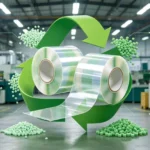
Tape Grade Recycled BOPP Film is a specialized industrial-grade substrate engineered exclusively for packaging tape production. It adopts high-quality Recycled Polypropylene (RPP) as the core raw material, mainly sourced from Post-Industrial Recycling (PIR) streams. These clean materials include qualified production offcuts, edge trimmings, and standardized manufacturing scraps generated during formal BOPP film production processes.
Unlike impure recycled materials, PIR raw materials feature single-stream purity, zero household contamination, stable molecular structure, and consistent quality batches. Through professional sorting, cleaning, re-extrusion and biaxial stretching processes, the finished recycled BOPP film perfectly inherits the core physical properties of virgin BOPP. It maintains excellent clarity, sturdy tensile strength, stable elongation, and reliable sealing performance, while significantly cutting virgin plastic consumption and lowering corporate carbon footprints.
2. Core Market Drivers for Recycled BOPP Film
The rapid market penetration of recycled BOPP tape materials is not a temporary marketing trend but a strategic industrial upgrade driven by global policy regulation, brand sustainable transformation, and explosive
2.1 Stringent Global
Sustainability compliance has evolved from optional corporate social responsibility to mandatory industrial standards. The EU’s Packaging and Packaging Waste Regulation (PPWR) has set clear and rigid recycled content targets for plastic packaging, requiring 35% recycled materials by 2030 and 65% by 2040 for specific industrial packaging categories. North American and Asian markets have also launched successive plastic restriction policies and recycled content certification standards, forcing downstream packaging manufacturers and brand owners to phase out high-virgin plastic materials and adopt traceable eco-friendly
2.2 Enterprise Sustainable Brand Commitments
E-commerce, logistics, FMCG, and cross-border manufacturing brands are facing growing public and supply chain scrutiny of environmental credentials. Carton sealing tape is a high-consumption, universal packaging material used throughout global logistics systems. Upgrading to recycled BOPP tape enables enterprises to achieve tangible, data-verified sustainable improvements without overhauling existing packaging lines, changing product design, or sacrificing packaging stability. It is the most cost-effective and low-risk green transformation solution for large-scale
2.3 Booming Sustainable Packaging
Industry market data shows that the global BOPP film market exceeded $22 billion in 2024 and maintains steady annual growth. Notably, the annual growth rate of global sustainable packaging film demand reaches 11.5%, far exceeding the growth rate of traditional packaging materials. This data fully proves that eco-friendly packaging has become a rigid mainstream demand rather than a niche market preference. Enterprises that adopt recycled BOPP materials in advance can effectively seize sustainable market dividends and meet the procurement standards of global high-end customers.
3. Performance Advantages: PIR Recycled Material Eliminates Dow
The biggest concern for buyers regarding recycled plastic products is unstable quality caused by impure raw materials. This concern mainly targets Post-Consumer Recycled (PCR) plastics. PCR materials are sourced from scattered household and commercial waste plastics, which are easily contaminated by food residues, ink labels, mixed polymers, and dust. Such uncontrollable impurities lead to fluctuating product quality, insufficient adhesion, and poor tensile resistance, making PCR materials unsuitable for high-standard
Tape Grade Recycled BOPP Film completely avoids the defects of PCR materials by adopting 100% Post-Industrial Recycled (PIR) raw materials. All raw materials come from standardized industrial production workshops, with fixed component ratios, zero secondary pollution, and stable batch consistency. Strict industrial-level sorting, cleaning, and reprocessing procedures ensure that the molecular structure of RPP materials is consistent with virgin polypropylene.
In actual industrial applications, PIR-based recycled BOPP film achieves performance indicators almost identical to virgin film, including tensile strength, breaking elongation, low-temperature resistance, and adhesive bonding stability. Leading industry verification cases have confirmed that BOPP films containing high proportions of recycled materials can fully adapt to high-speed automated packaging lines without tape cracking, uneven unwinding, or weak sealing problems. The successful application of 30% recycled content BOPP films in high-precision label packaging further verifies that modern manufacturing technology can balance high recycled content and premium industrial
4. Wide Industrial Application Scenarios
One of the core advantages of Tape Grade Recycled BOPP Film is its zero-threshold compatibility. It can completely replace traditional virgin BOPP film and adapt to all existing packaging scenarios and equipment. Customers do not need to replace dispensers, adjust packaging parameters, or modify production lines, ensuring seamless switching and stable production efficiency. Its core application scenarios cover high-volume industrial and commercial packaging
Carton Sealing & E-commerce Fulfillment: Suitable for daily parcel sealing, warehousing sorting, and retail distribution packaging, meeting the high-frequency and high-volume usage needs of e-commerce
Heavy: Ideal for factory finished product packaging and heavy cargo transportation, providing strong and durable sealing protection to prevent carton opening during
Cross-Border Export Packaging: Compliant with international sustainable packaging standards, with excellent moisture resistance and aging resistance, ensuring stable sealing performance during long-distance ocean transportation and variable
5. Authoritative Certifications for</h2
To avoid greenwashing and provide credible sustainable proof for global buyers, our Tape Grade Recycled BOPP Film supports full-process traceability and holds multiple internationally authoritative third-party certifications. These standardized qualifications ensure the authenticity of recycled content and meet the audit requirements of global brand suppliers:
GRS (Global: Verifies the exact recycled content ratio, realizes full supply chain traceability, and standardizes environmental and social production norms.
RCS (Recycl: Professionally tracks and certifies recycled components from raw material processing to finished products, providing valid
ISCC+ Certification: Applies to mass balance system verification and chemically recycled material identification, adapting to international advanced circular material evaluation systems.
6. Future Outlook: Closed-Loop Circular Packaging
Tape Grade Recycled BOPP Film represents the inevitable evolution of the global packaging industry toward circular and low-carbon development. It is not a short-term promotional product but a long-term sustainable material solution. With continuous technological innovation, the industry will further increase recycled material proportions, develop recyclable high-barrier coatings, and upgrade precise material sorting technologies, enabling recycled BOPP films to apply to more high-end refined
In the future, closed-loop production and recycling will become the mainstream model of the BOPP film industry. By reusing industrial waste materials, the industry will reduce reliance on fossil resources, cut carbon emissions throughout the lifecycle, and build a truly sustainable packaging ecosystem.
7. Conclusion
Tape Grade Recycled BOPP Film completely breaks the long-standing industry dilemma of “performance versus sustainability”. With high-purity PIR recycled raw materials and mature industrial processing technology, it retains the premium sealing strength, clarity, and stability of traditional virgin BOPP film, while bringing significant environmental
For packaging manufacturers and global brand owners, choosing Tape Grade Recycled BOPP Film is a simple, efficient, and low-risk sustainable upgrade solution. It helps enterprises comply with international environmental policies, complete carbon reduction targets, enhance green brand competitiveness, and win sustainable market development space in the increasingly standardized global circular economy sytsem.
Message us for more information