What Is Holographic Packaging Film? Breaking Packaging Visual Boundaries from Laser Recording to Precision Lithography
Introduction
Walk into any supermarket, cosmetic boutique or luxury liquor store, and one material instantly grabs consumers’ attention: holographic packaging film. Shimmering iridescent rainbow streaks shift with every tilt of the package, revealing hidden 2D/3D graphics, microtext and kinetic patterns invisible on conventional plastic wrappers. Unlike matte PET, plain BOPP or single-layer metallized films that only deliver flat reflective silver surfaces, holographic packaging film integrates photonics, nano-lithography and polymer coating technology to embed microscopic diffraction gratings inside flexible plastic substrates. It redefines packaging as more than a protective container, merging eye-catching visual marketing, high-level anti-counterfeiting security and multi-scenario material adaptability into one revolutionary tech material.
The modern mass production chain of holographic film relies on two core optical fabrication stages: laser holographic master origination and precision nano-lithography embossing. Many industry outsiders confuse “laser holography” and “lithography” as interchangeable terms, yet they serve distinct, sequential roles in production. Laser recording creates the original optical interference blueprint that carries complete 3D light information; lithography then reproduces these nanoscale grating structures onto industrial plastic rolls at high speed for mass packaging applications. This article unpacks the physical principles, layered material structure, full manufacturing workflow, industrial applications, competitive advantages and sustainable innovation trends of holographic packaging film, explaining how laser and lithography technologies jointly break the visual limits of traditional packaging.
1. Core Definition & Optical Working Principle of Holographic Packaging Film
1.1 Basic Definition
Holographic packaging film, also widely called laser hologram film or diffractive optical film, is a multi-layer flexible polymer substrate embedded with periodic nanoscale diffraction gratings and interference fringe microstructures. Common base substrates include BOPP (biaxially oriented polypropylene), PET polyester, CPP cast polypropylene and transparent PE, tailored for shrink wrapping, laminating pouches, hot stamping foil and paper carton lamination. Its unique light-splitting visual effect stems from light diffraction and wave interference—two optical phenomena absent in ordinary printed packaging materials.
Conventional offset printing or metallic coating only records light intensity (bright/dark) to form flat 2D images. Holography, by contrast, captures two full light wave properties: amplitude (brightness) and phase (3D spatial position information of reflected light). When natural white light hits the film’s nano-gratings, white light disperses into a full visible spectrum of red, orange, yellow, green, blue and violet, generating the signature shifting rainbow iridescence consumers recognize. Changing viewing angles alters how light interacts with the grating array, producing parallax effects, floating 3D logos and animated hidden patterns that cannot be replicated by standard printing.
1.2 Multi-Layer Film Structure (Functional Deconstruction)
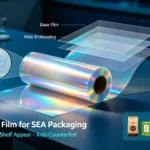
Every roll of finished holographic packaging film features a standardized 5-layer composite structure, each layer serving non-negotiable optical or protective functions:
- Base Substrate Layer: The mechanical backbone, usually 20–80μm BOPP/PET. BOPP dominates food shrink packaging for its heat shrinkability and low cost; PET is preferred for high-rigidity cosmetic and luxury packaging due to superior temperature resistance and transparency.
- Embossable Lacquer Recording Layer: The optical core where all holographic grating microstructures are permanently pressed. This UV-curable photopolymer lacquer softens under heat and pressure during lithography embossing, locking nanoscale interference fringes into its surface after cooling and curing.
- Vacuum Metallized Reflective Layer: A 10–100nm ultra-thin aluminum vapor coating applied under high vacuum. Aluminum maximizes light reflectivity to amplify rainbow diffraction effects; transparent holographic film omits this layer for see-through product display needs.
- Protective Top Coating: Scratch-resistant acrylic coating that shields fragile nano-gratings from friction, water vapor and oil contamination during printing, transportation and consumer unboxing.
- Functional Adhesive Layer (Optional): Added for cold lamination films, self-adhesive hologram labels and heat-transfer hot stamping foils, enabling direct bonding to paper, cardboard or composite plastic bags.
Without the precision grating patterns etched into the lacquer layer via laser and lithography, the film would merely act as a dull standard metallized plastic sheet with no color-shifting optical effects.
2. Two Core Technologies: Laser Master Recording & Nano Lithography Embossing
The full industrial production of holographic packaging film splits into two irreplaceable technological phases: laser holography for master plate creation, and nanoimprint lithography for mass film replication. The two technologies complement rather than replace one another, each solving unique technical bottlenecks.
2.1 Phase One: Laser Holographic Master Origination (The Original Blueprint)
All holographic patterns start with laser interference recording to create a single high-precision master plate, the foundational mold for all mass-produced film rolls. The process strictly requires coherent monochromatic laser light (argon-ion solid-state lasers or He-Ne gas lasers) due to the extreme precision demands of interference fringe formation.
Step-by-Step Laser Recording Workflow
- Beam Splitting: A single stable laser beam passes through an optical beam splitter, dividing into two perfectly synchronized light paths: the object beam and the reference beam.
- Object Beam Modulation: The object beam illuminates target graphics, brand logos, 3D models or custom micro-text designs. Light bounces off the subject carrying complete spatial depth information of the target pattern.
- Interference Fringe Generation: Reflected light from the object beam collides with the direct reference beam on a photosensitive photoresist glass plate. Wave crests and troughs overlap to form billions of nanometer-scale alternating light/dark interference fringes—these fringes encode all holographic visual data, invisible to the naked eye.
- Chemical Curing & Development: The exposed photoresist plate undergoes darkroom chemical processing, solidifying fringe structures into permanent physical grooves as shallow as 200 nanometers (smaller than visible light wavelengths).
- Nickel Electroforming Shim Production: The fragile glass photoresist master is electroplated with thick nickel metal. The nickel shim is a durable negative mold of the laser-recorded fringes, capable of withstanding millions of high-pressure embossing cycles on industrial film production lines.
This laser origination stage defines the upper limit of hologram complexity. High-security anti-counterfeiting packaging integrates multi-angle laser recording to produce volume holograms with multi-layer hidden graphics, nearly impossible for counterfeiters to duplicate without identical high-cost laser optical equipment.
2.2 Phase Two: Precision Nano Lithography (Mass Replication on Packaging Film)
Laser recording only produces one limited nickel shim master; lithography is the industrial bridge that transfers nano-grating patterns onto thousands of kilometers of flexible packaging film rolls efficiently. In holographic film manufacturing, lithography primarily refers to roll-to-roll nanoimprint lithography, a continuous high-speed embossing technology optimized for plastic substrates.
Core Lithography Embossing Mechanism
The nickel hologram shim is wrapped around a heated embossing roller. As unprocessed base film with uncured photopolymer lacquer passes between the embossing roller and a compression back roller, controlled heat (80–150°C) and high linear pressure soften the lacquer layer. The shim’s nanoscale grooves press mirror diffraction gratings directly into the lacquer surface. Post-embossing UV light instantly cures the lacquer, permanently locking the holographic microstructure into the film substrate without distortion.
Key Advantages of Lithography for Packaging Manufacturing
- Mass Production Efficiency: Roll-to-roll lithography processes 300–1000 meters of holographic film per minute, compatible with large-scale packaging material industrial lines.
- Pattern Uniformity: Lithography eliminates visual inconsistencies between separate film batches, ensuring identical iridescent effects across thousands of retail packages.
- Customization Flexibility: Manufacturers switch nickel shims within minutes to produce custom brand holograms, seasonal limited-edition patterns or encrypted anti-counterfeiting micro-gratings.
- Cost Control: One laser-recorded nickel shim supports millions of meters of lithography embossing, spreading high upfront laser master development costs across mass production and lowering per-unit film pricing.
Critical technical distinction to clarify: Laser technology creates the original optical information blueprint; lithography reproduces that blueprint onto flexible packaging materials for commercial use. Neither technology alone can produce finished holographic packaging film for retail markets.
3. Main Industrial Application Scenarios of Holographic Packaging Film
The dual strengths of decorative visual impact and built-in anti-counterfeiting functionality make holographic film ubiquitous across global packaging verticals, with four dominant market segments:
3.1 Cosmetic & Personal Care Premium Packaging
Cosmetic brands prioritize shelf differentiation in crowded retail environments, and holographic film delivers unmatched visual luxury. Transparent holographic zipper pouches for serums, holographic lamination film for makeup cartons and hot-stamping hologram foil for lipstick tubes create a futuristic premium aesthetic. Light-shifting rainbow surfaces elevate perceived product value, while embedded microtext holograms prevent counterfeit skincare replicas that flood e-commerce channels.
3.2 Food & Beverage Wrapping
BOPP holographic shrink film dominates snack bags, candy packaging and premium bottled beverage full-body shrink sleeves. Beyond visual appeal, BOPP substrates provide excellent oxygen and moisture barrier properties to extend food shelf life. Child-targeted confectionery relies on dynamic shifting holographic patterns to drive impulse purchases, while high-end tea and dried fruit brands use encrypted hologram shrink wraps to seal product authenticity—tampering destroys the continuous holographic pattern, enabling instant visual authenticity checks by consumers and retailers.
3.3 Luxury Tobacco, Wine & Gift Packaging
The tobacco and high-end liquor industries were early adopters of high-security holographic film. Full-wrap holographic BOPP shrink film seals entire wine bottles; any opening irreparably damages the integrated holographic anti-counterfeit layer. Custom laser-recorded 3D brand emblems embedded via lithography embossing create multi-level security barriers, as counterfeiters lack access to identical laser recording and nano-lithography equipment required to replicate complex volumetric holograms. Gift boxes, jewelry packaging and festival limited-edition gift wrapping also widely adopt holographic laminating film for high-end unboxing experiences.
3.4 Electronic Accessories & Security Anti-Counterfeit Labels
Small electronics, charging cables and wearable device packaging use thin holographic PET pouches for lightweight protection and brand identification. Tamper-evident holographic adhesive labels—cut from lithography-processed holographic film—are applied to electronics boxes, pharmaceutical medicine packaging and official document seals. Hidden kinetic holographic patterns only visible at specific viewing angles act as low-cost, highly reliable anti-counterfeiting markers without requiring specialized detection tools.
4. Unique Competitive Advantages Over Conventional Packaging Materials
Compared to plain transparent film, single-layer metallized silver film and traditional printed packaging paper, holographic film delivers three irreplaceable core values:
4.1 Unmatched Retail Shelf Visibility
Static flat packaging fails to stand out under store fluorescent lighting, while holographic film’s dynamic light-diffracting rainbow effects catch consumer eyes from several meters away. Multiple consumer market surveys confirm products wrapped in holographic packaging generate 30%–60% higher impulse purchase rates than identical goods in standard wrappers, driven by the novel interactive visual experience of color shifting as shoppers rotate packages.
4.2 Built-In, Low-Cost Anti-Counterfeiting Security
Complex laser-recorded holographic master plates and nano-lithography embossing equipment carry multi-million-dollar entry barriers for counterfeit operators. Custom encrypted gratings, micro-fonts smaller than human eyes can read, and 3D parallax images embedded into film layers create multi-tier security impossible to replicate via offset printing or simple metallic coating. Unlike separate adhesive anti-counterfeit labels integrated externally, holographic patterns are fused directly into packaging film substrates, eliminating label peeling and counterfeit label replacement risks.
4.3 Multi-Material Compatibility & Versatile Processing
Holographic film substrates (BOPP, PET, CPP, PE) adapt to all mainstream packaging manufacturing workflows: roll shrink wrapping, cold/hot lamination, heat transfer hot stamping, zipper pouch extrusion and carton surface coating. Film thickness ranges from ultra-thin 20μm lightweight wrapping to rigid 100μm heavy-duty protective pouches, meeting diverse protection, transparency and sealing requirements across food, beauty and luxury product lines.
5. Sustainable Innovation: The Future Evolution of Laser & Lithography Holographic Film
Global packaging industry sustainability regulations push holographic film manufacturers to upgrade laser recording and lithography processes for lower carbon footprints, solving historical plastic recyclability challenges:
- Mono-Material Holographic Substrates: New-generation all-PET holographic film removes composite multi-material layers that block recycling sorting. Laser master design and lithography embossing parameters are adjusted to produce diffraction gratings on single recyclable PET without mixed aluminum-polymer layers that contaminate recycling streams.
- Biodegradable Photopolymer Lacquer Layers: Traditional UV-curable lacquer layers used in lithography embossing are non-biodegradable; plant-based photopolymer coatings compatible with standard laser recording systems are now mass-produced, enabling fully compostable holographic packaging for single-use food and cosmetic applications.
- Low-Energy Laser & Lithography Production Lines: Modern solid-state laser recording equipment cuts power consumption by 45% compared to legacy gas lasers, while low-temperature roll-to-roll lithography embossing reduces heating energy waste during mass film replication, lowering overall production carbon emissions.
- Transparent Non-Metallized Holographic Film: Aluminum vacuum metallization layers complicate plastic recycling. Transparent holographic film omits the reflective aluminum layer, relying purely on laser-etched diffraction gratings to generate subtle iridescent effects. This fully recyclable variant grows rapidly in clean-beauty and eco-friendly food brand packaging lines.
Beyond sustainability, technological upgrades push holographic visual performance further: advanced computational laser holography generates ultra-high-resolution 8K 3D graphics, while next-generation nano-lithography achieves sub-100nm grating precision for ultra-fine hidden security patterns invisible to counterfeit scanning equipment.
Conclusion
Holographic packaging film represents a perfect fusion of fundamental optical physics and industrial packaging manufacturing, bridging laboratory laser holography research to mass-market consumer products through scalable nano-lithography replication technology. From the nanometer-precise interference fringes carved by coherent laser beams in master origination, to high-speed roll-to-roll lithography embossing that reproduces these optical blueprints onto flexible plastic substrates, every production stage redefines what packaging can achieve beyond basic product protection.
In an increasingly saturated retail market where brands compete fiercely for consumer attention, holographic film breaks the flat visual limitations of traditional wrappers with dynamic, interactive light-driven aesthetics. Simultaneously, its laser-lithography composite manufacturing process delivers embedded anti-counterfeiting security unavailable to conventional printing materials. As sustainable material innovations refine substrate recyclability and cut production energy costs, holographic packaging film will expand further across food, beauty, luxury goods and pharmaceutical verticals, continuing to reshape the global packaging industry’s visual and functional boundaries for years to come.
Message us for more information