PP Film Introduction

06.18.2026


PP film, fully named polypropylene film, is one of the most productive and widely used polymer functional film materials worldwide, belonging to the category of polyolefin plastic films. With balanced physical properties, excellent processing adaptability, low cost and recyclable environmental advantages, PP films cover numerous fields including civil packaging, industrial manufacturing, electrical and electronic, new energy, medical treatment and agriculture. It is an indispensable basic material for modern light industry and manufacturing. This article systematically analyzes the core industry knowledge of PP films from five dimensions: concept definition, core characteristics, detailed classification, application scenarios and industry development trends.

1. Core Concept Definition of PP Film

PP film is a thermoplastic polymer film material processed with polypropylene resin (PP particles) as the core raw material through a series of refined processes such as melt extrusion, casting, biaxial stretching, heat setting and cooling winding.

Polypropylene, the core raw material, is a lightweight general-purpose plastic with a stable molecular structure, non-toxic and odorless. After secondary processing such as modification, stretching and coating, it can derive functional film materials with different performances and specifications. It can meet both ordinary civil packaging needs and high-end industrial precision manufacturing scenarios, serving as a basic film product with both universality and customization. Compared with similar films such as PE film and PVC film, PP film has obvious differentiated advantages in rigidity, heat resistance, moisture resistance and insulation.


2. Core Characteristics of PP Film

The comprehensive performance advantages of PP film have established its dominant position in the industry. Its core characteristics are divided into four categories: basic physical properties, chemical properties, processing and environmental protection properties, as detailed below:

2.1 Excellent Physical Properties

First, it is lightweight with a density of only 0.90~0.91g/cm³, one of the lightest common plastic films, which can effectively reduce the overall weight of packaged products and finished products, saving transportation and raw material costs. Second, it has high transparency and good glossiness, with the light transmittance of high-quality PP film reaching more than 90%, featuring strong printing adaptability and high-quality finished product appearance. Third, it has balanced mechanical properties with excellent tensile strength, rigidity and stiffness, resisting stretching, tearing and bending without deformation, suitable for high-speed automatic processing equipment. Fourth, it has outstanding heat resistance; conventional PP film can withstand high temperatures up to about 120°C, adapting to high-temperature cooking and heat sealing processing, and is not easy to embrittle at low temperatures.

2.2 Stable Chemical Properties

PP film has an inert molecular structure, possessing excellent resistance to acid, alkali, salt spray and organic solvent corrosion. It is not easily eroded by daily grease, cleaning agents and weak corrosive media, and does not age or deteriorate easily after long-term use. Meanwhile, the material has excellent moisture-proof and water vapor barrier performance, far better than ordinary PE film, which can effectively protect internal materials from moisture and deterioration.

2.3 Strong Processing Adaptability

PP film has extremely high plasticity. Its transparency, roughness, barrier property, conductivity and other properties can be adjusted through various processes such as stretching, coating, modification, matte treatment and corona treatment. It also supports full-process deep processing including printing, compounding, heat sealing, slitting and bag making, and can be processed into various special-shaped film materials, packaging bags, protective films, insulating films and other products.

2.4 Safe, Environmentally Friendly and Cost-Effective

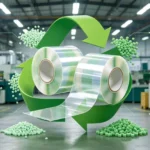
Pure PP film is non-toxic and odorless, free of plasticizers, heavy metals and other harmful substances, complying with food contact and medical supplies safety standards. The material is recyclable and reprocessable without harmful volatile substances, belonging to an environmentally friendly plastic film. Meanwhile, with sufficient raw material capacity and mature processing technology, it has low mass production cost and much higher cost performance than high-end films such as PET and nylon, suitable for large-scale industrial application.

Relative Disadvantages: Ordinary low-temperature toughness with reduced impact resistance in extremely cold environments; average oxygen barrier performance of conventional PP film, which requires modification or coating to improve high barrier performance; weak UV resistance, requiring UV-resistant additives for long-term outdoor use.

3. Mainstream Classification of PP Film (Industry General Classification)

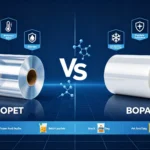
The most core and general classification method in the industry is classification by production process, which divides PP films into three core categories: BOPP film, CPP film and IPP film. In addition, functional modified films can be subdivided by function and appearance. The specific classification and characteristics are as follows:

3.1 Biaxially Oriented Polypropylene Film (BOPP)

BOPP is the most widely used PP film in the industry, manufactured through longitudinal and transverse biaxial stretching processes with regular molecular arrangement and stable and balanced performance.

Core Characteristics: Extremely high transparency, excellent glossiness, high rigidity and stiffness, good printing adhesion, high mechanical strength and excellent moisture resistance. It cannot be directly heat-sealed, and modification or compounding processes are required to realize heat sealing.

Sub-categories: Ordinary glossy film, matte film, pearlescent film, metallized film, delustered film, high-transparency film, etc., adapting to different appearance and functional requirements.

3.2 Cast Polypropylene Film (CPP)

CPP is a non-stretched PP film formed by melt casting process with simple technology and excellent thickness uniformity.

Core Characteristics: Good flexibility and flatness, directly heat-sealable, better low-temperature performance than BOPP film, strong puncture resistance and toughness, and good transparency. It is the mainstream heat-sealing base film, with slightly lower rigidity and stiffness than BOPP film.

Sub-categories: Ordinary CPP, cooking-grade CPP (high-temperature resistant), high-transparency CPP, low-temperature resistant CPP, etc.

3.3 Uniaxially Oriented Polypropylene Film (IPP)

IPP is a film formed only by longitudinal uniaxial stretching, with improved directional longitudinal tensile strength and easy transverse tearing.

Core Characteristics: High longitudinal tensile strength, easy longitudinal tearing and extremely high cost performance. It is mainly used for low-end scenarios such as simple packaging, binding and winding, and rarely applied in high-end packaging.

3.4 Functional Modified PP Film

High-end products made by coating, painting, additive modification and surface treatment on the basis of basic film materials, which accurately meet the needs of segmented industries. Main types include: metallized PP film (high barrier and light-proof), flame-retardant PP film, anti-static PP film, anti-fog PP film, antibacterial PP film, high-barrier PP film, photovoltaic insulating PP film, etc.

4. Full-Scenario Application Fields of PP Film

Relying on diversified categories and adjustable performances, PP films cover from low-end general scenarios to high-end precision industrial scenarios. The core application fields are as follows:

4.1 Packaging Industry (Core Main Application, Accounting for Over 70%)

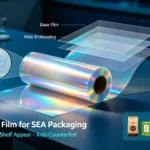
Packaging is the largest application market of PP films, covering full-category packaging of food, daily chemicals, daily necessities and industrial products. In the food industry, BOPP films are commonly used for outer packaging of snacks, biscuits, candies, bread and tea, featuring exquisite printing and moisture-proof fresh-keeping performance. Cooking-grade CPP films are applied to high-temperature cooking packaging of braised food, cooked food and vacuum fresh-keeping food with safety and high temperature resistance. In the daily chemical industry, it is used for outer bags of shampoo, body wash, skin care products, mask packaging and coating of daily chemical products. In addition, metallized PP films are suitable for packaging puffed food and dry goods to avoid light and moisture and extend shelf life; pearlescent PP films are widely used in color printing packaging and gift packaging with high-grade appearance texture. Meanwhile, PP films are also used for outer packaging and lamination of clothing, shoes, hats, stationery and books.

4.2 Electronic, Electrical and New Energy Industry

With excellent electrical insulation, high voltage resistance, aging resistance and anti-static performance, PP film is a core insulating material in the electronic industry. Conventional PP films are used for wire and cable insulation layers, electrical appliance panel protective films, circuit board isolation films and anti-static films for electronic component packaging. High-end modified PP films can be applied to new energy precision fields such as lithium battery diaphragm auxiliary substrates, photovoltaic module insulating films and capacitor films, ensuring the operational safety of new energy equipment with stable insulation and temperature resistance.

4.3 Medical and Pharmaceutical Industry

Food-grade and medical-grade PP films are non-toxic, sterile, disinfection-resistant and corrosion-resistant, meeting medical safety standards. They are mainly used for drug packaging bags, capsule blister packaging substrates, medical mask outer packaging, disposable medical consumables packaging and medical dressing lamination. They can withstand ethylene oxide and high-temperature disinfection with strong sealing performance, which can effectively isolate bacteria and dust and ensure the cleanliness of medical supplies.

4.4 Industrial and Building Materials Industry

In industrial scenarios, PP films can be used as anti-rust and dust-proof protective films for metal plates, hardware products and precision parts, featuring wear resistance and corrosion resistance; they are also applicable to tape substrates, composite plate interlayers and industrial winding films. In the building materials field, flame-retardant and weather-resistant modified PP films are used for decorative plate lamination, door and window protective films and auxiliary waterproof films, with both protective and decorative functions.

4.5 Agricultural and Civil Daily Fields

In agriculture, anti-fog and weather-resistant PP films are applied to simple greenhouse films, seedling thermal insulation films and agricultural product fresh-keeping packaging films with good light transmittance and moisture and mildew resistance. In daily life, they are widely used for album inner pages, laminating films, storage bags, binding films, flower packaging films and other scenarios.

5. Current Situation and Development Trend of the Industry

At present, China’s PP film industry has entered a mature stage with sufficient production capacity and mature technology, making China the world’s largest producer and exporter of PP films. The industry presents a structural feature of “overcapacity in low-end products and shortage of high-end functional products”. The market of ordinary BOPP and CPP films is highly competitive, while high-value-added high-end products such as high-barrier, antibacterial, flame-retardant, new energy-specific and degradable modified PP films have become the core development direction of the industry.

Meanwhile, with the upgrading of environmental protection policies, recyclable, low-energy and bio-based modified PP films have become research and development hotspots to replace traditional non-degradable films. The rapid development of downstream industries such as new energy, high-end food packaging and medical consumables continues to drive the market demand for functional PP films, promoting the industry to transform and upgrade towards refinement, high-end customization and green development.

6. Summary

With the core advantages of light weight, safety, stable performance, strong processability and high cost performance, PP film has become a cornerstone material in the film industry. The three basic categories of BOPP, CPP and IPP support the general market, and various functional modified films expand high-end segmented scenarios, fully covering core fields such as packaging, electronics, medical treatment, new energy and industry. In the future, the industry will continuously eliminate low-end extensive production capacity, focus on the research and development of high-performance, environmentally friendly and specialized products, adapt to the upgrading needs of downstream industries, and continuously release market development potential.


Message us for more information

    This website uses cookies to analyze traffic, optimize browsing experience and deliver relevant marketing content. You may accept all cookies or decline non-essential tracking cookies. View our full rules in the User Privacy Policy.