Interpack & WEPACK 2026: Mono-Material + Digital Print Enable Recyclable Flexible Packaging
03 August 2026 · 8 min read
In the spring of 2026, the packaging world converged on two sides of the globe: WEPACK 2026 in Shenzhen (April) and interpack 2026 in Düsseldorf (May). Although separated by a month and thousands of kilometres, both events sent a unified, unmistakable signal: the deep integration of mono-material recyclable structures and digital printing is moving flexible packaging from a conceptual circular economy to an operational reality.
WEPACK 2026: cross-industry synergy and “paper–film fusion”
WEPACK 2026 delivered a remarkable performance: three days, 137,157 unique visitors, including 13,598 international attendees from more than 130 countries, alongside nearly 100 professional buying delegations. The numbers underscore China’s gravitational pull as a global packaging manufacturing hub.
But the most telling industry signal came from the inaugural “Innovative Flexible Packaging Special Zone – Paper & Film Sustainability”. For the first time, mono-material recyclable films, paper-based composites, and digital printing technologies were placed side by side as core pillars of the exhibition.
The strategic logic is clear: sustainable packaging is not a binary choice between paper and plastic, but a systemic challenge that demands cross-material collaboration. The zone spanned green materials, coating and converting, intelligent printing, and green factory & VOC management — a full-chain perspective. Concurrent forums, such as the Global Flexible Packaging Innovation & Sustainability Forum and ESG & Green Supply Chain Summit, linked regulatory pressure (like the EU PPWR) with technological execution, creating a coherent narrative from compliance to implementation.
On the hardware front, digital printing equipment dominated. Hanway, JHF, Shenzhen Wandong, Runtianzhi, and many others showcased high-speed single-pass inkjet systems for corrugated and flexible packaging; international names like Konica Minolta and Canon also presented flagship digital solutions. The takeaway: digital printing has moved far beyond “short-run prototyping” and entered the main stage of mass production.
WEPACK’s message: in the sustainability transition, isolated breakthroughs are no longer enough. Material suppliers, equipment makers, converters, and brand owners must form closed-loop collaboration. “Paper–film synergy” is not a slogan — it is the real direction of industrial restructuring.
interpack 2026: inkjet printing “takes over” the packaging industry
If WEPACK showcased China’s integration power, interpack 2026 presented the depth of global technological transformation. Official figures: 2,804 exhibitors from 65 countries, professional visitors from 161 countries, 75% from outside Germany and 28% from outside Europe — a record international footprint that confirms the global synchronisation of packaging change.
The forum agenda itself was a manifesto. The Spotlight stage covered daily themes: PPWR opportunities and risks, resource efficiency, smart packaging, AI and automation, circular economy, innovative materials — each day addressed a systemic challenge facing the industry.
But the most electrifying signal came from the inkjet printing sector. Multiple industry observers noted that inkjet was no longer a “nice to have” — it is now a dominant force reshaping the entire supply chain. SCREEN Europe demonstrated the Truepress PAC 520P, a digital inkjet press purpose-built for recyclable paper-based packaging, running at 80 m/min with water-based food-safe inks, eliminating plate-making and tooling. Crucially, SCREEN’s messaging tied directly to market reality: with PE prices surging due to geopolitical tensions (Strait of Hormuz) and PPWR compliance pressure, paper-based packaging is shifting from an “ESG story” to a commercial imperative.
This is a critical nuance: while mono-PE/PP recyclable structures are mature, raw material volatility and supply chain uncertainty are accelerating parallel investment in paper-based routes. The future is not “plastic vs. paper” — it is a pluralistic, multi-path landscape where both coexist.
Buyer delegations from Asia, the Middle East, and North America showed strong interest in corrugated digital printing solutions tailored to local e-commerce logistics, confirming that customisation driven by e-commerce is now a global phenomenon.
interpack’s message: the marriage of inkjet and sustainable packaging is not accidental — plate-less, on-demand ink supply inherently reduces material waste, resonating perfectly with PPWR compliance and carbon-footprint management. When “small batches, high variety” becomes the norm, digital printing is the key that makes flexible production economically viable.
Key takeaways from both events
- WEPACK 2026: Mono-material recyclable films + paper-based materials in parallel; digital inkjet printing in the spotlight; regulatory alignment through forums; strong buyer matching and cross-industry co-op.
- interpack 2026: Inkjet “taking over” packaging printing; paper-based packaging as a commercial hedge; PPWR as daily agenda; end-to-end displays from materials to software.
- Common denominator: Mono-material structures solve the “recyclability” problem at the base; digital printing adds the ability to personalise without added complexity. Together, they make every link — design, production, use, and recovery — traceable, manageable, and optimisable.
The convergence: how the recyclability loop becomes real
Bringing the two shows together, a clear logic emerges:
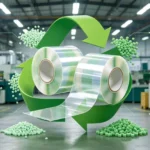
- Mono-material films (PE, PP, and increasingly paper-based alternatives) provide the structural foundation for recyclability, meeting the 90% single-material threshold required by CEFLEX and PPWR.
- Digital printing eliminates the need for protective varnishes or over-laminates in many cases, reducing material layers and simplifying recycling, while enabling variable data, traceability, and short-run economics.
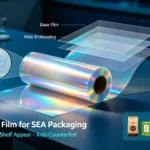
- Together, they enable a “design-for-recycling” approach that does not sacrifice shelf appeal or barrier performance — a message reinforced by both WEPACK and interpack.
The loop is closing: brands can now design packaging that is both highly functional and fully recyclable, print it digitally with minimal waste, and have it recovered and recycled at end-of-life — all while meeting PPWR deadlines and consumer expectations.
What this means for converters, brands, and the supply chain
For decision-makers, two events have clarified the near-term roadmap:
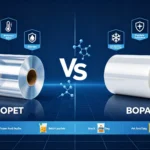
- Paper-based packaging is hitting a commercial tipping point. As SCREEN highlighted, resin price volatility and supply-chain risks are making paper not just an ESG choice but a financial hedge. The barrier performance, heat-sealability, and printability of paper-based structures are advancing fast — a natural extension of the “BOPET vs. BOPA” substrate logic you have previously explored.
- PPWR compliance is no longer a distant deadline. From the forum agenda at interpack, European converters are treating 2030 as a daily reality. Export-oriented brands and converters need a clear action guide — from material selection to certification and reporting.
- Digital printing ROI is becoming calculable. The sheer density of digital press exhibits at both events indicates that the technology is mature, but converters still need data-driven models to justify investment. Content that answers “how long until payback?” will be highly valuable.
- China is increasingly part of the global sustainability conversation. With record international attendance at WEPACK and active Asian buyer delegations at interpack, cross-border collaboration is accelerating. This is a long-term narrative worth tracking.
Message us for more information