Flexible Packaging Film Defects: Root Causes, Fixes & Prevention Tests
Flexible laminated packaging films are widely used for frozen seafood, cooked meat, snacks and oily food. During extrusion, printing, lamination, storage and long-distance transportation, various quality defects frequently occur, raising scrap rates, delaying shipments and harming brand image.
This guide systematically sorts out the most frequent film quality issues. For each defect, we analyze visible symptoms, root manufacturing causes, targeted solutions for both film converters and food brand purchasers, plus standardized testing methods for early risk prevention. A complete ASTM test checklist is attached at the end to standardize your incoming material inspection process.
1. Flex Cracking During Handling & Transportation
Film generates tiny cracks and pinholes after repeated bending, extrusion and shipping stacking.
- Poorly controlled winding tension creating micro-tears
- Sharp edges on slitting & packaging equipment scratching film
- Agglomerated calcium carbonate or filler particles inside extruded film
For film converters: Choose high puncture-resistant substrates. Replace BOPP/met/PE with BOPA/met/PE for better anti-flex performance. Increase film thickness if production allows.
For food brand owners: Inspect packaging production line, remove sharp metal edges and adjust over-tight winding tension.
Conduct Gelbo flex pinhole test (ASTM F392) to validate flex crack resistance before mass production approval.
2. Cold-Crack Fracture — Frozen Package Breakage
Film becomes brittle and cracks easily under low-temperature storage & transport; package corners crack most frequently.
- Lack of low-temperature toughness of composite film structure
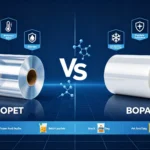
- BOPET polyester film turns fragile under minus freezing temperature
- Over-oriented film loses anti-impact performance
For converters: Use BOPA as outer layer instead of BOPET; BOPA keeps great toughness at -18°C. Add low-temperature modified PE sealant layer.
For brand owners: Require suppliers to complete low-temperature drop test for frozen meat & seafood packaging during qualification.
Ask suppliers to provide cold-crack resistance & drop test reports under your actual freezer temperature.
3. Ink Adhesion Failure — Rubbing & Peeling Print
Printed ink flakes or rubs off easily after lamination, delivery and daily handling.
- Low dyne level, insufficient corona surface treatment on film
- Mismatched ink formula and plastic substrate
- Excess humidity in water-based ink printing workshop
- Overhigh lamination heat redissolves printed ink layer
For converters: Meet surface tension standard: ≥38 dyne for BOPP/BOPET, ≥40 dyne for BOPA. Re-do corona/flame treatment if dyne value fails.
For brand owners: Confirm ink compatibility with your packaging film at early development stage.
Complete ASTM D3359 tape adhesion test after printing before lamination production.
4. Ghosting Print Defects — Uneven Printing Appearance
Faint duplicate ghost images appear on printed film; uneven color density damages product display effect.
- Misaligned impression roller & unstable printing pressure
- Uncontrolled ink viscosity during gravure printing
- Static electricity sticks film to printing cylinder
- Incomplete drying leads to solvent residue
For converters: Calibrate printing roller pressure, install auto ink viscosity controller and static elimination bars.
For brand owners: Request production printing log to ensure stable printing process control.
Set clear standards for color density tolerance & register accuracy in your purchasing specification.
5. Heat Seal Curling — Distorted Flat Packaging Bags
Packaging curls severely along heat seal seams after sealing, causing troubles for auto-packaging and shelf display.
- Different shrinkage ratio between outer substrate and inner sealant layer
- Uneven heat distribution of sealing bar
- Unfinished stress relief during film manufacturing
For converters: Balance composite film structure, adjust orientation ratio or annealing temperature, match shrink performance of each layer.
For brand owners: Lower sealing temperature with longer dwell time to reduce curling.
Run heat seal curvature test under your real production sealing parameters before finalizing film structure.
6. Odor & Flavor Taint — Package Contaminates Food Taste
Packaged food absorbs abnormal smell and off-taste, found during QC flavor sensory test.
- Residual solvent from printing & solvent-based lamination adhesives
- Low molecular additives migrate from film into food content
- Oxidized degradation substances generated during film extrusion
- Incompatible ink reacts with oil & fat inside food
For converters: Switch to solvent-free lamination adhesive, extend full curing time, adopt low-migration printing ink, stabilize extrusion temperature.
For brand owners: Add sensory flavor testing rules for high-fat food packaging material qualification.
Comply with EU 10/2011 migration standards for EU food packaging, ask suppliers for sensory evaluation reports.
Full Packaging Failure Test Checklist for Material Qualification
| Failure Category | Standard Test Method | Testing Stage |
|---|---|---|
| Film Delamination | Peel Strength Test (ASTM F904) | New Material Qualification |
| Seal Contamination & Weak Seal | Hot Tack & Heat Seal Strength (ASTM F1921 / ASTM F88) | New Material Qualification |
| Flex Crack & Pinhole | Gelbo Flex Test (ASTM F392) | Multi-transit Heavy Handling Packaging |
| Low-Temperature Cold Crack | -18°C Drop Test + Cold Crack Test | Frozen Food Packaging |
| Ink Peeling & Poor Adhesion | Tape Adhesion Test (ASTM D3359) | Post Printing Inspection |
| Odor & Food Taint Risk | Sensory Panel Test + VOC Residual Test | All Food Contact Packaging |
Conclusion
Nearly all flexible packaging defects are predictable and avoidable via standardized pre-production testing and consistent process management, rather than random bad luck.
Our technical team supports customers from packaging design phase to eliminate common film failure risks. Defective packaging will damage your brand reputation, product quality and end-user trust.
Got packaging film troubleshooting problems? Contact our professional technical team for customized material & production solutions.
Message us for more information